Daybase
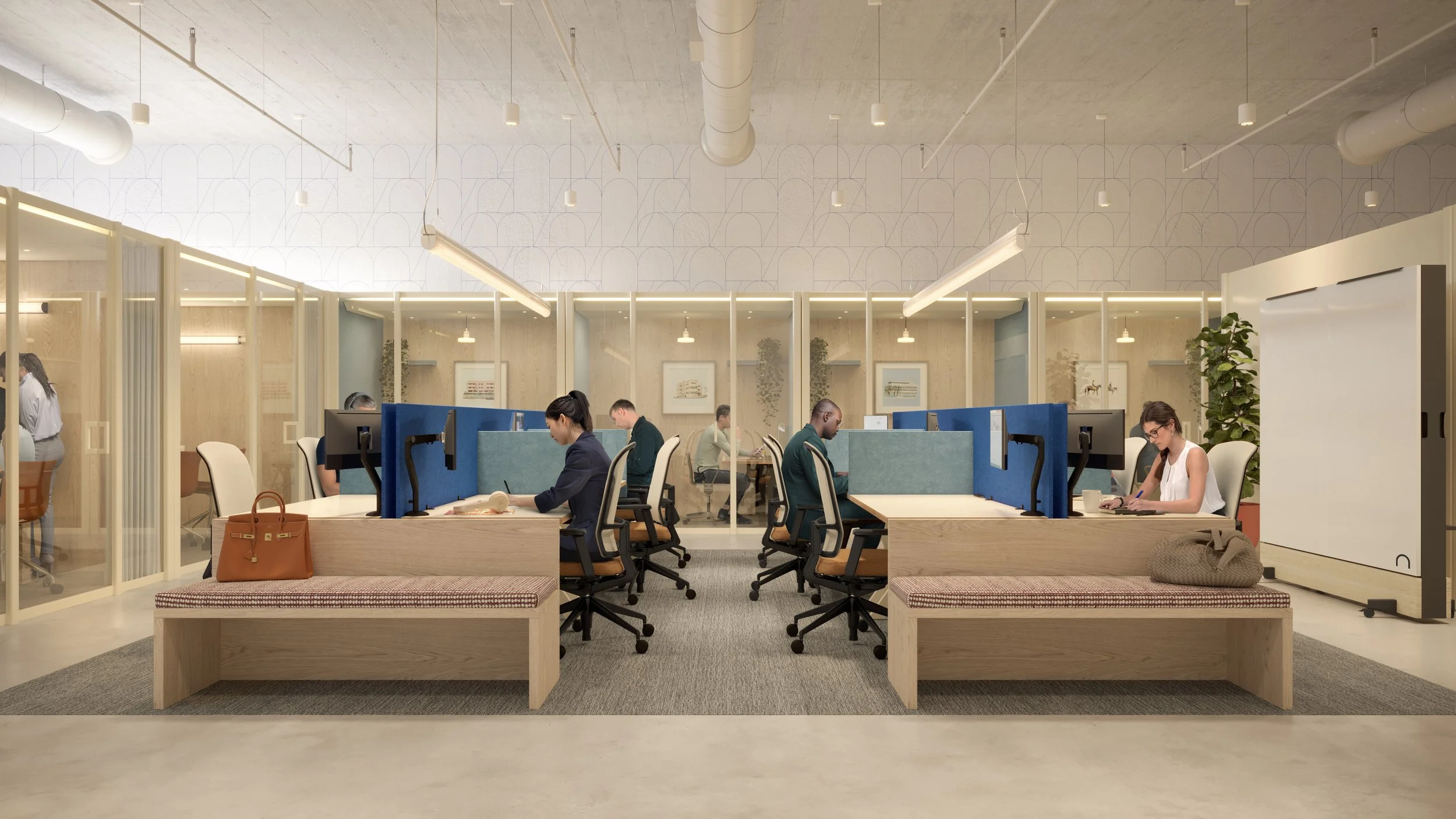
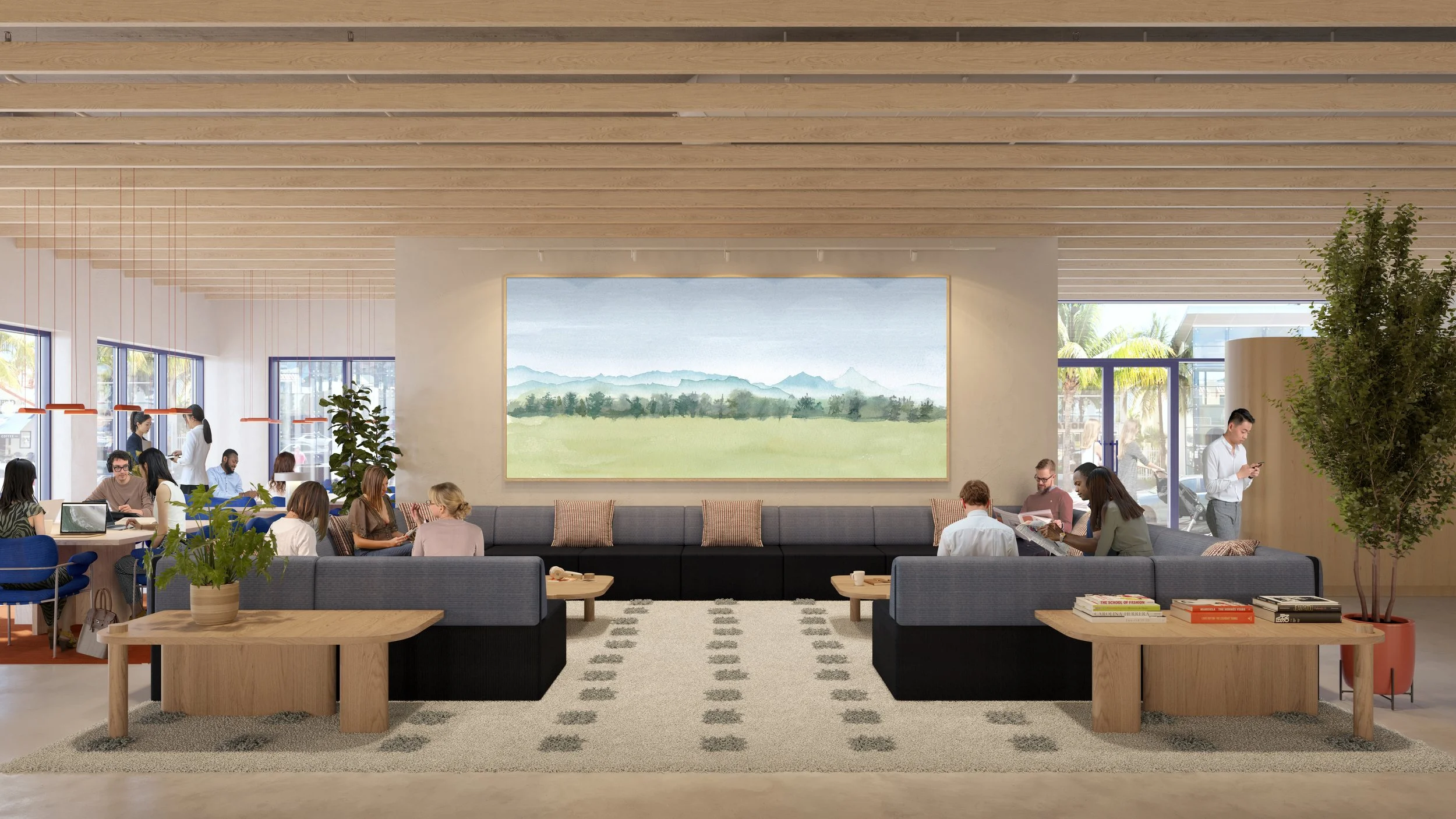
A service that allows customers to book workspaces in a communal setting close to their homes that allows for coworking with great technology and ease-of-use for the remote or hybrid worker. As a the Founding Product Designer, I collaborated with the Head of Product and Head of Engineering to ideate, design, and develop the mobile app, marketing website, and branding elements in close collaboration with Mythology.
Challenge
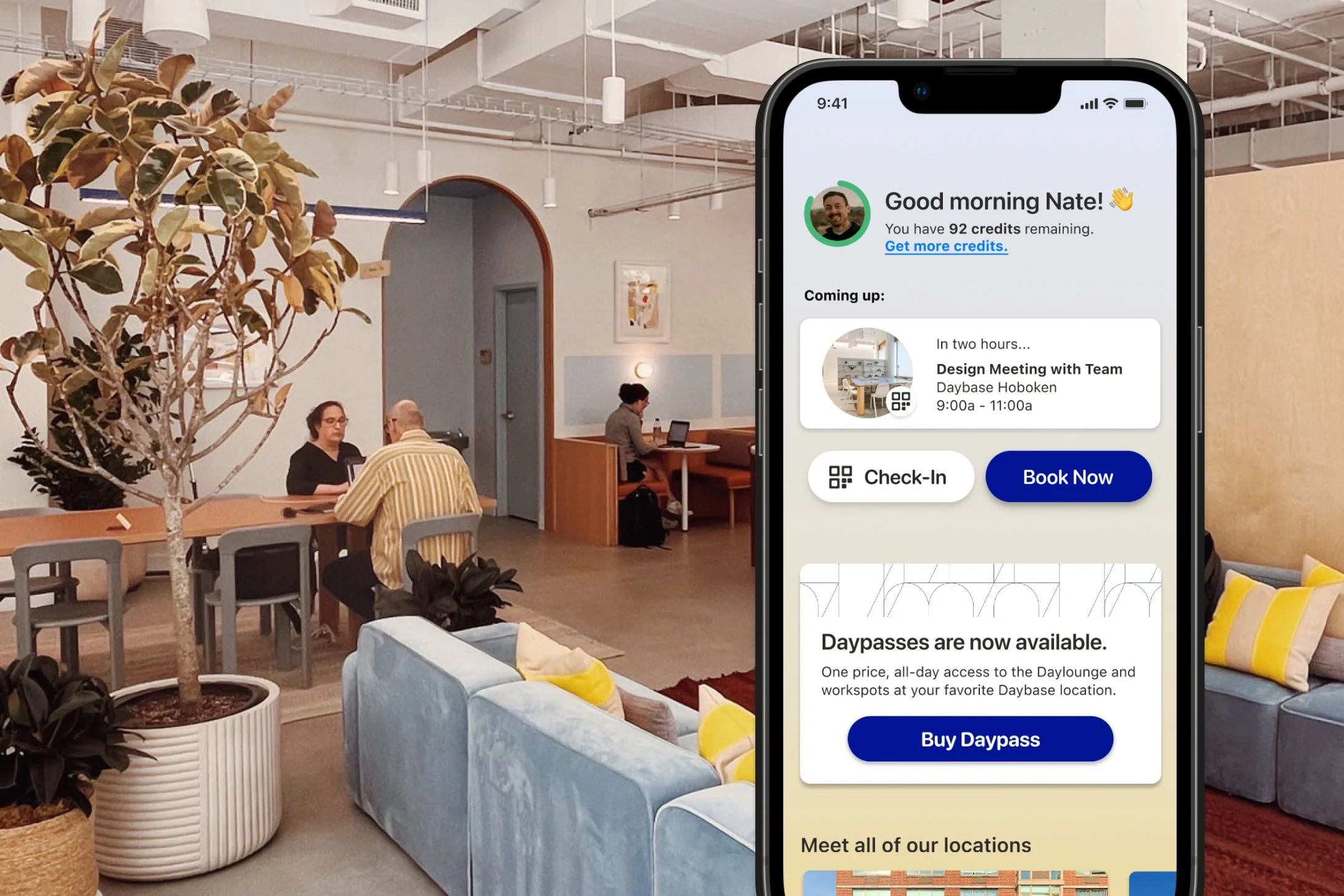
Create a digital application for a physical coworking space which allows users to reserve and manage various workspots, buy account credits, and invite coworkers.
Impact
An application to allow users to book sharable workspaces with 95% efficiency, delivered for both iOS and Android. Scaled business revenue through the app to allow for opening of three brick-and-mortar locations.
My Role
Founding product designer, research, branding consultant, and product manager.
Timeline
August 2020 - October 2022
Research & Analysis
I began with conducting generative research with the Head of Product. We asked individuals that we were potential users aggrigated from posts on social networks and UserTesting.com with opt-in surveys. From there we developed personas around common themes we found within the 50+ interviews. We spoke individuals from various disciplines — from venture capitalists to individual contributors, and from people with studio apartments to people living in a camper van.
Two themes emerged:
Users with children, and users who wanted a change of scene from their dwellings in the immediate wake of the pandemic.
Customers who wanted a cost-effective service as a solution that was easy to access and fully bookable and manageable from their mobile devices.
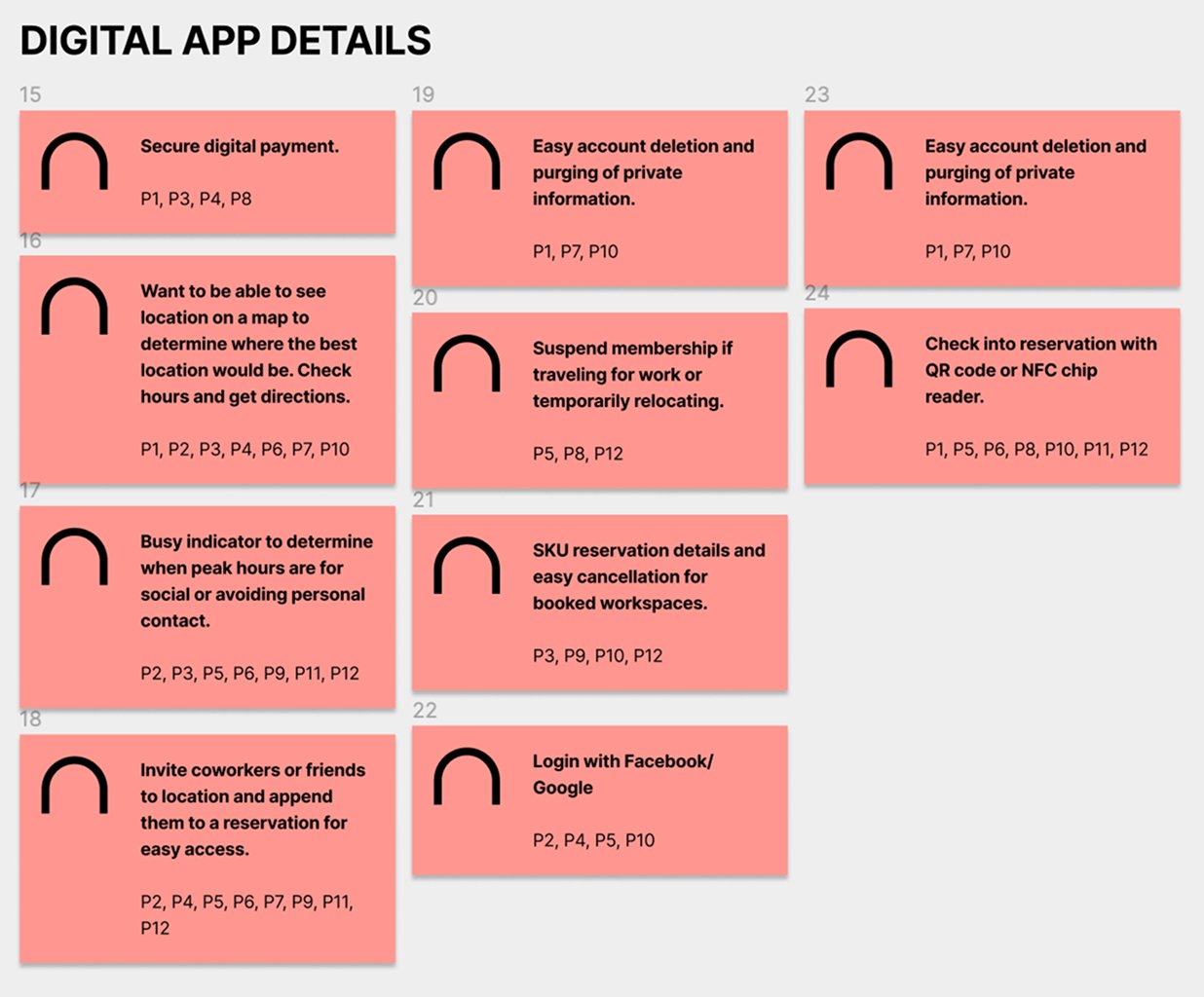
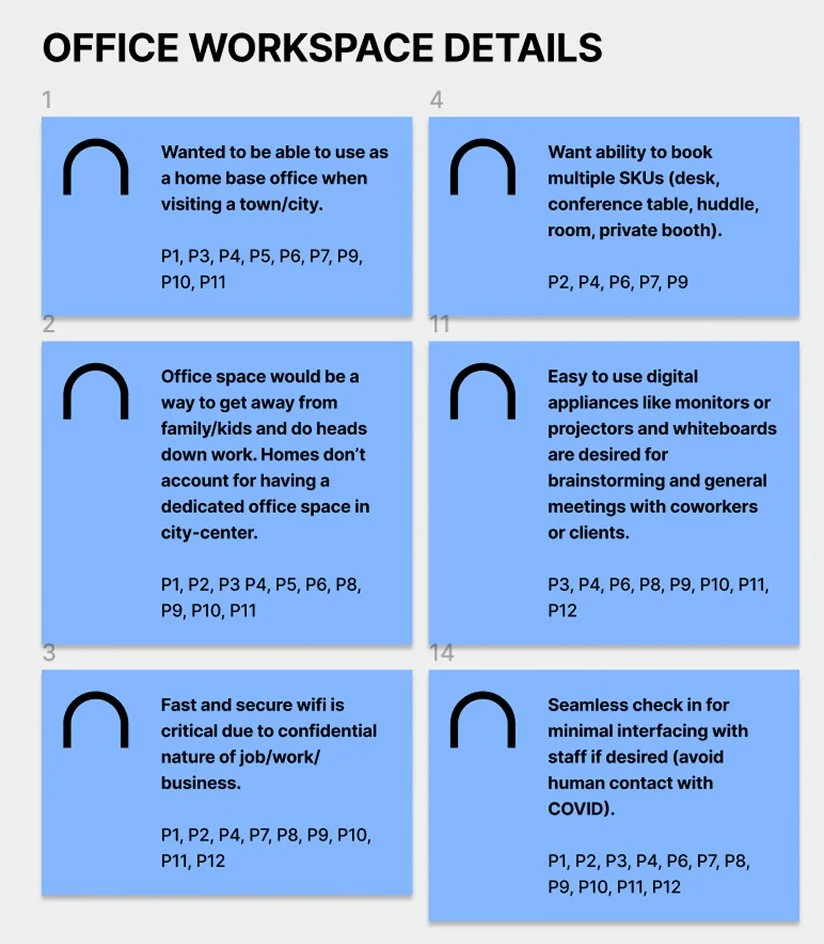
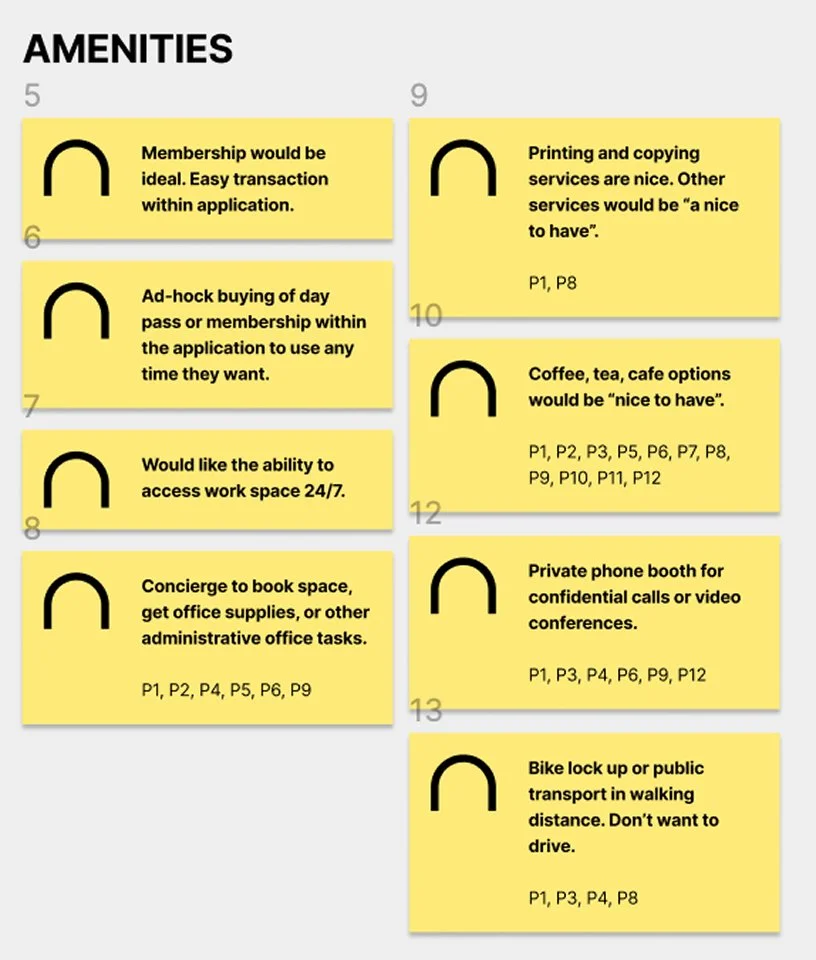
I conducted competitive analysis with the big names in reservation and hospitality services: Delta Airlines, Airbnb, Uber, Classpass, and also assessed the entire landscape for easy-to-access sign up and account management. It was critical to leverage existing patterns which had the highest success rates. This allowed people to quickly sign up and begin using Daybase, whether they were Founding Members, or customers who were walk-ins (via foot traffic).
Beginning with pen-and-paper sketches, we went through several iterations of the application design before finalizing the experiential workflow of the application. I constructed high fidelity sketches and prototypes via Figma.

“...I work remotely full time and live in a 2 bedroom condo with kids 5 minutes away from downtown Hoboken. I really want a space to get out of the apt to focus on work. This app makes it so easy to quickly book a spot. I need this.”
Michella, Research Participant
Wireframing & Development
As Daybase, originally named HQ2, was in the conceptual phase, we did not yet have established branding. I worked to mock up high fidelity screens for the CEO and VP to garner support from investors and generate excitement from the concept. These were critical to establishing a vision for the MVP version.
User stories derived from research informed the information architecture and translated those designs into clickable prototypes to ensure we were building the right application the correct way.
Those insights determined the need for:
Secure login pages and password recovery
Account management
Location and workspace reservation
Workspace details
Reservation management
Health and safety information
Daybase company information
As our team was small, I acted as Product Manager writing requirements and crafting Epics and corresponding designs while partnering with the engineer and closing up gaps in the pre-alpha prototype.
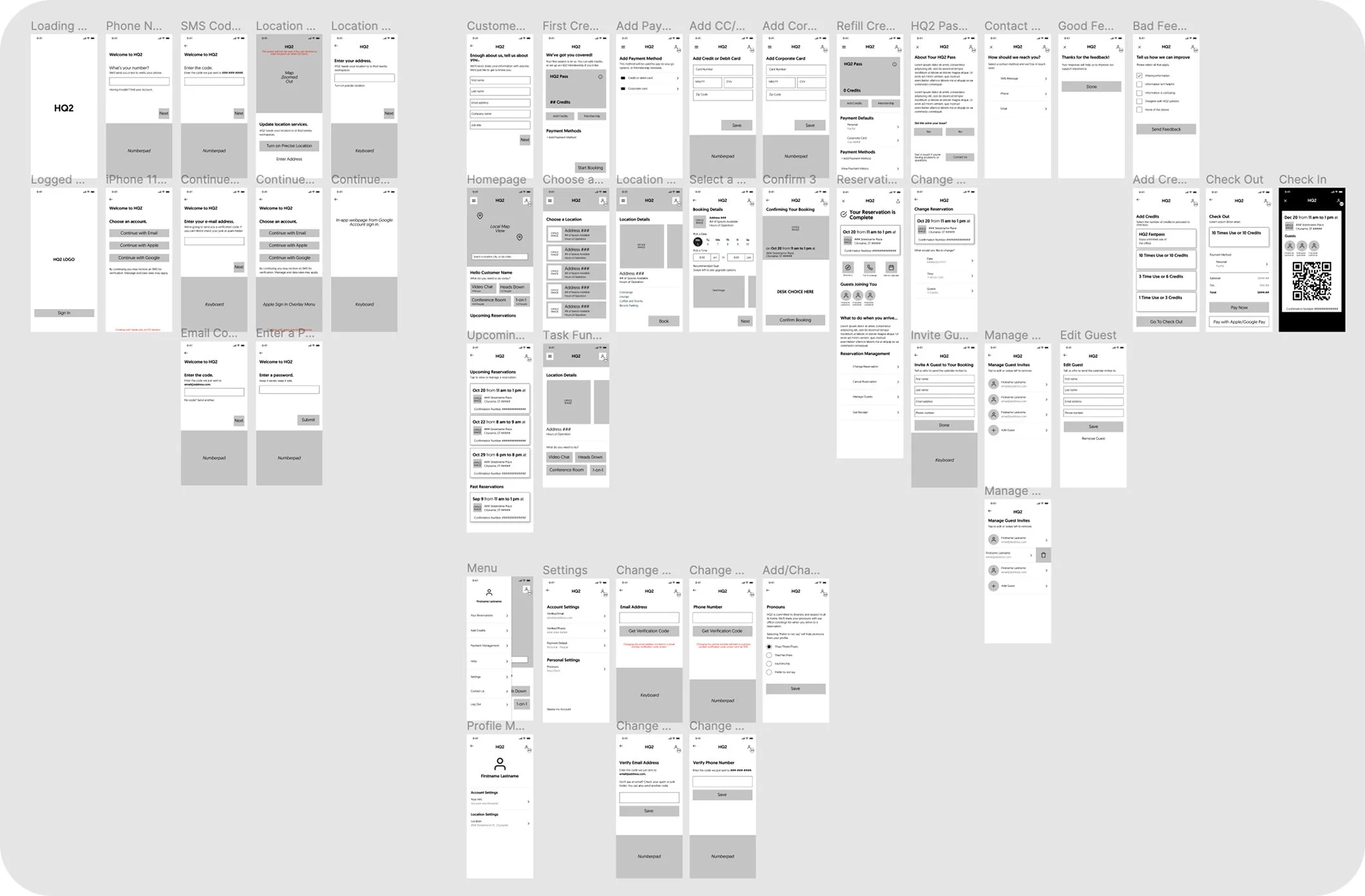
I did all the design work in Figma and shared with the lead engineer who would also make suggestions based on engineering inputs and work sizing and scale.
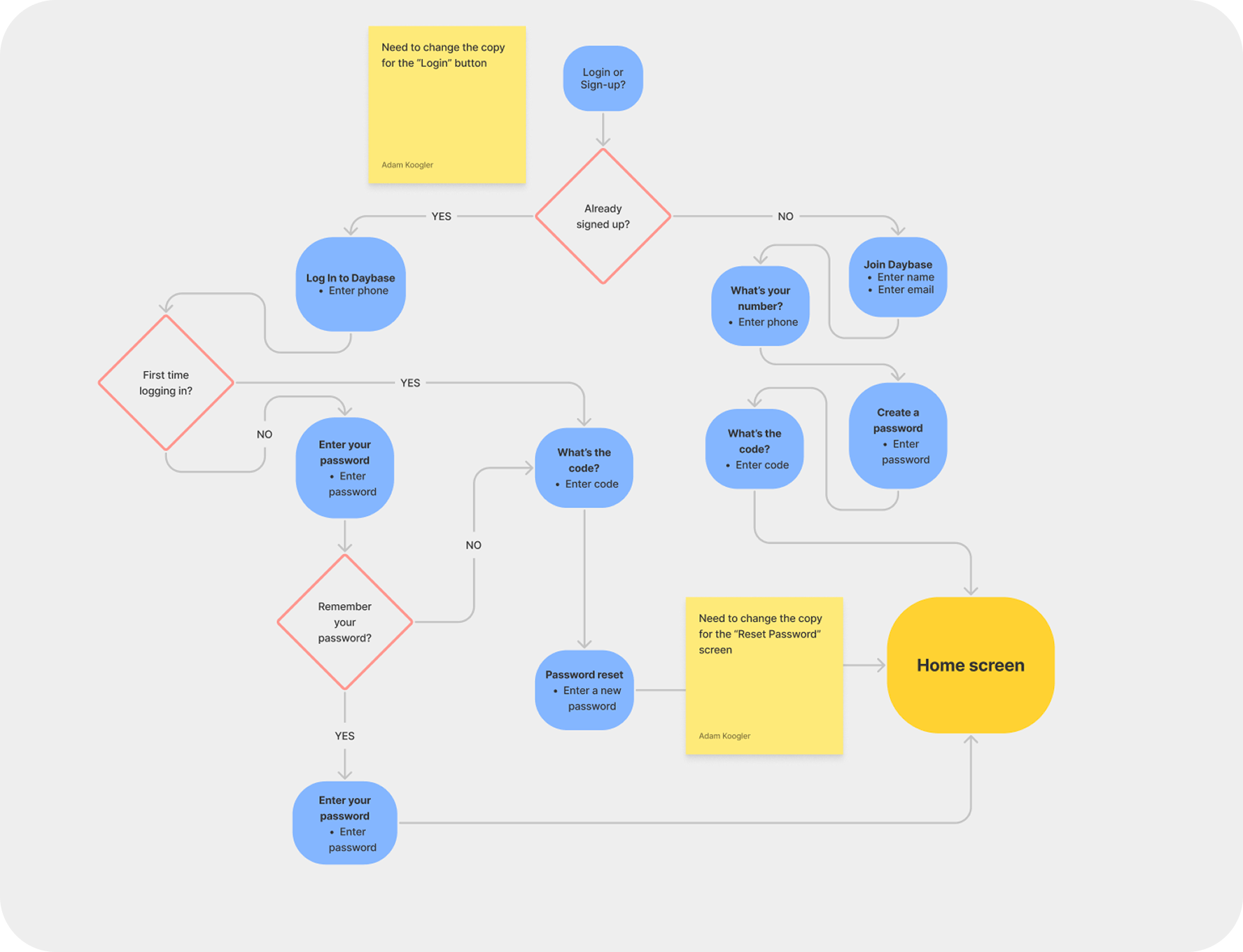
We broke the work out into 34 different feature epics. We developed flowcharts and journey maps to establish the needs for each feature. One example was the complexity of designing a sign-up/login flow with forgot password capabilities.
We leveraged Figjams to create the flows and make notes where stakeholders and owners had additional input. From there I created the necessary designs and closely partnered with the lead engineer to close any gaps in experience or design.
The engineer and I would work together designing solutions and translating those insights into the alpha version which would be used for additional research sessions and investor validation meetings.
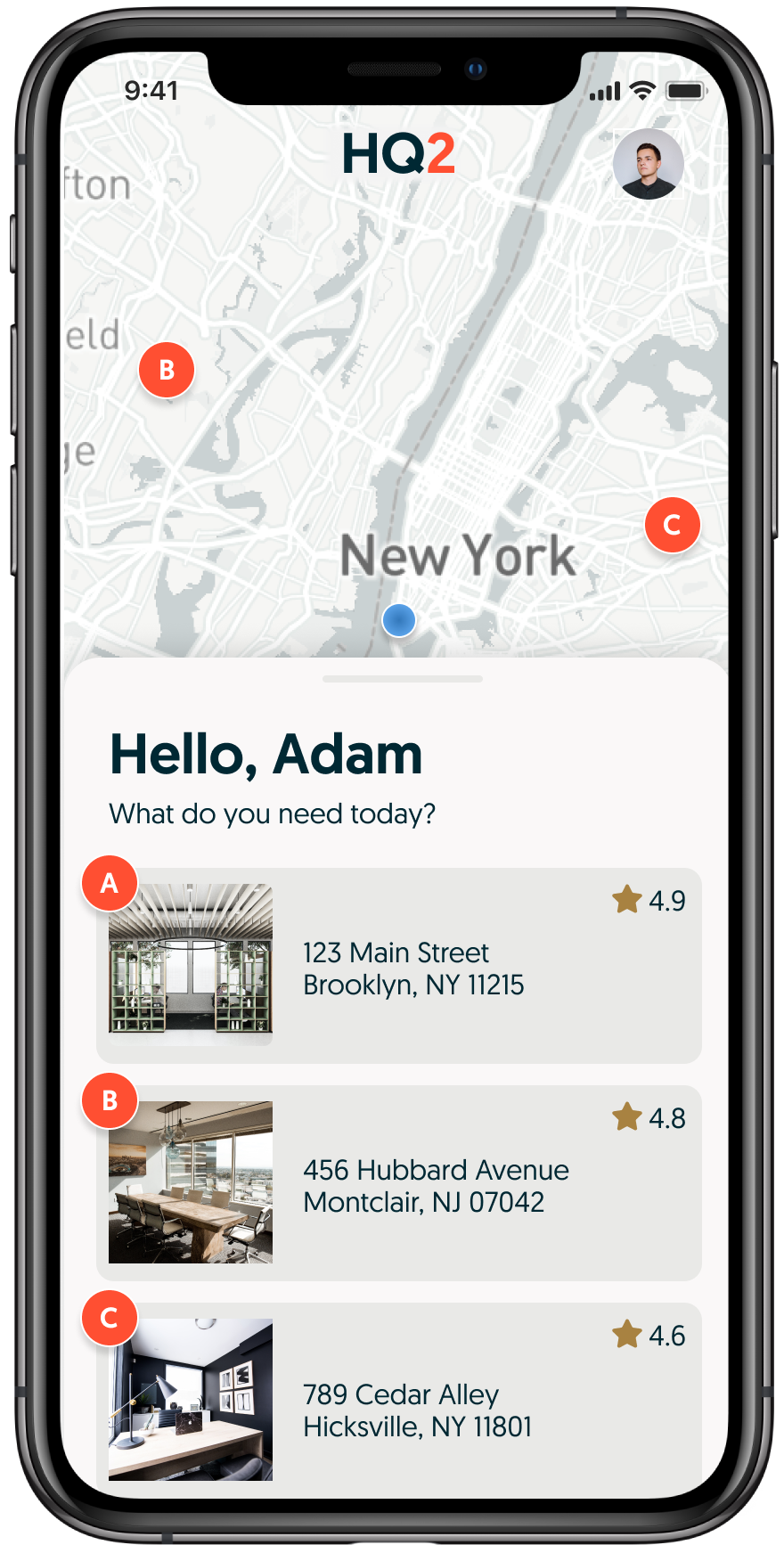
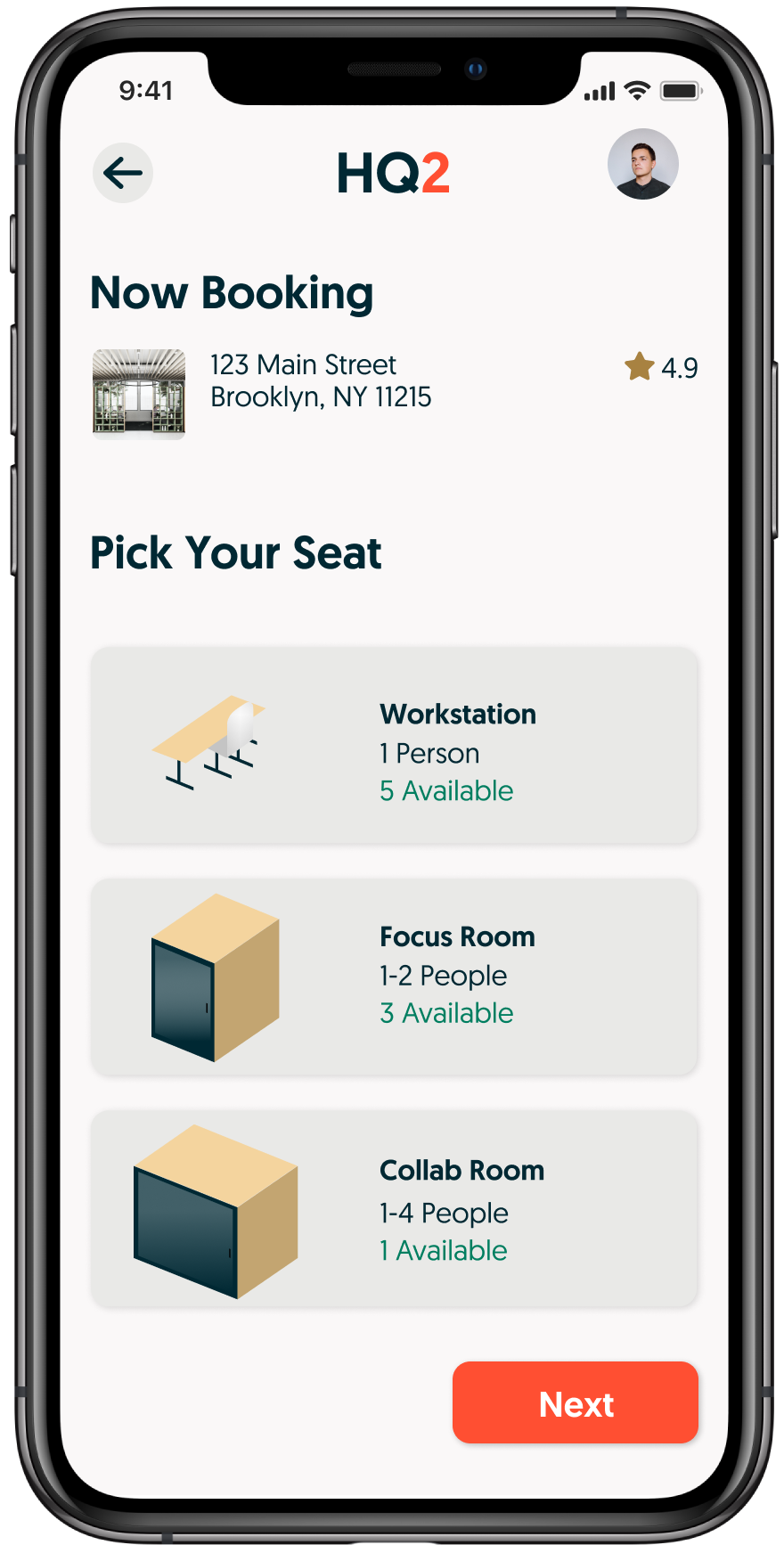
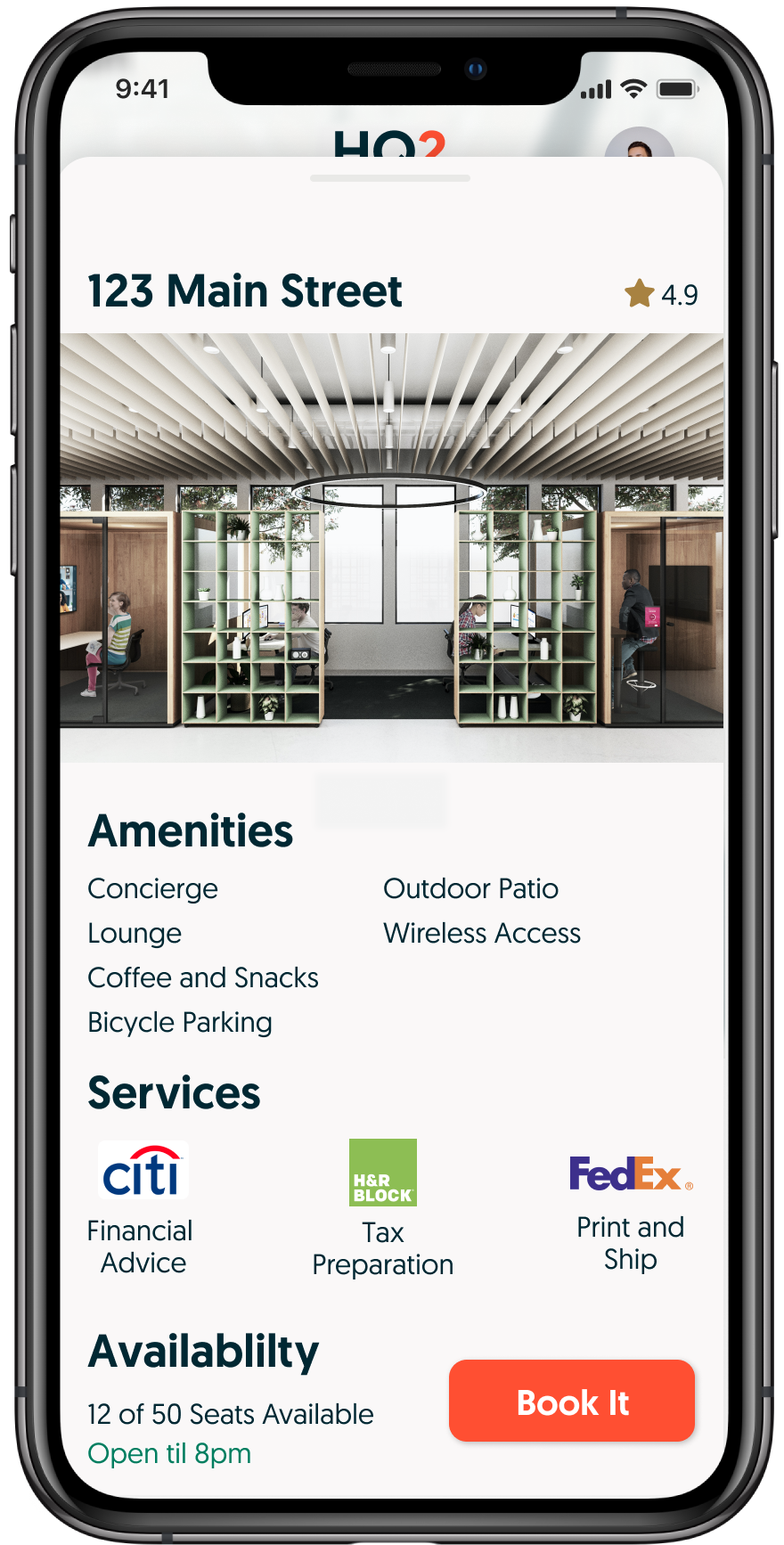
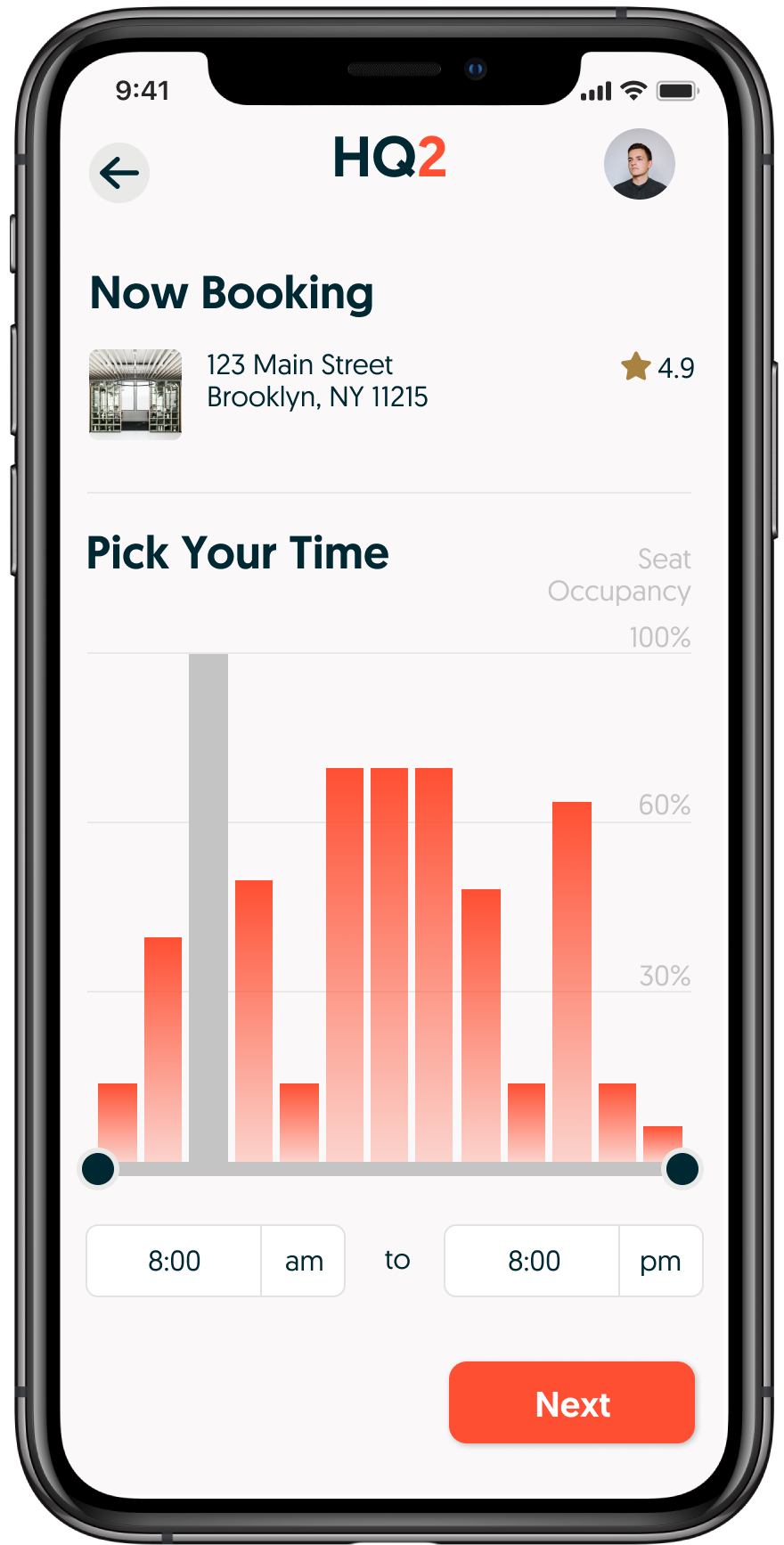
The Daybase logo and brand ideology came into fruition around August 2020, which gave us about 3 months to make the necessary UI changes before commercially launching the app into the Apple and Android app stores.
Going into the project, I was an advocate for Figma design components, which made the visual changes a breeze to implement. I folded in the core visual brand guidelines and collaborated with the Head of Marketing to ensure brand cohesion while still complying with WCAG 2.1 accessibility standards.
During this time, we also made sure to test for colorblindness and individuals with neurodiverse conditions to ensure the app was a pleasurable visual experience. Inclusivity was key to the brand and the app’s development.
Finalizing the App for Deployment
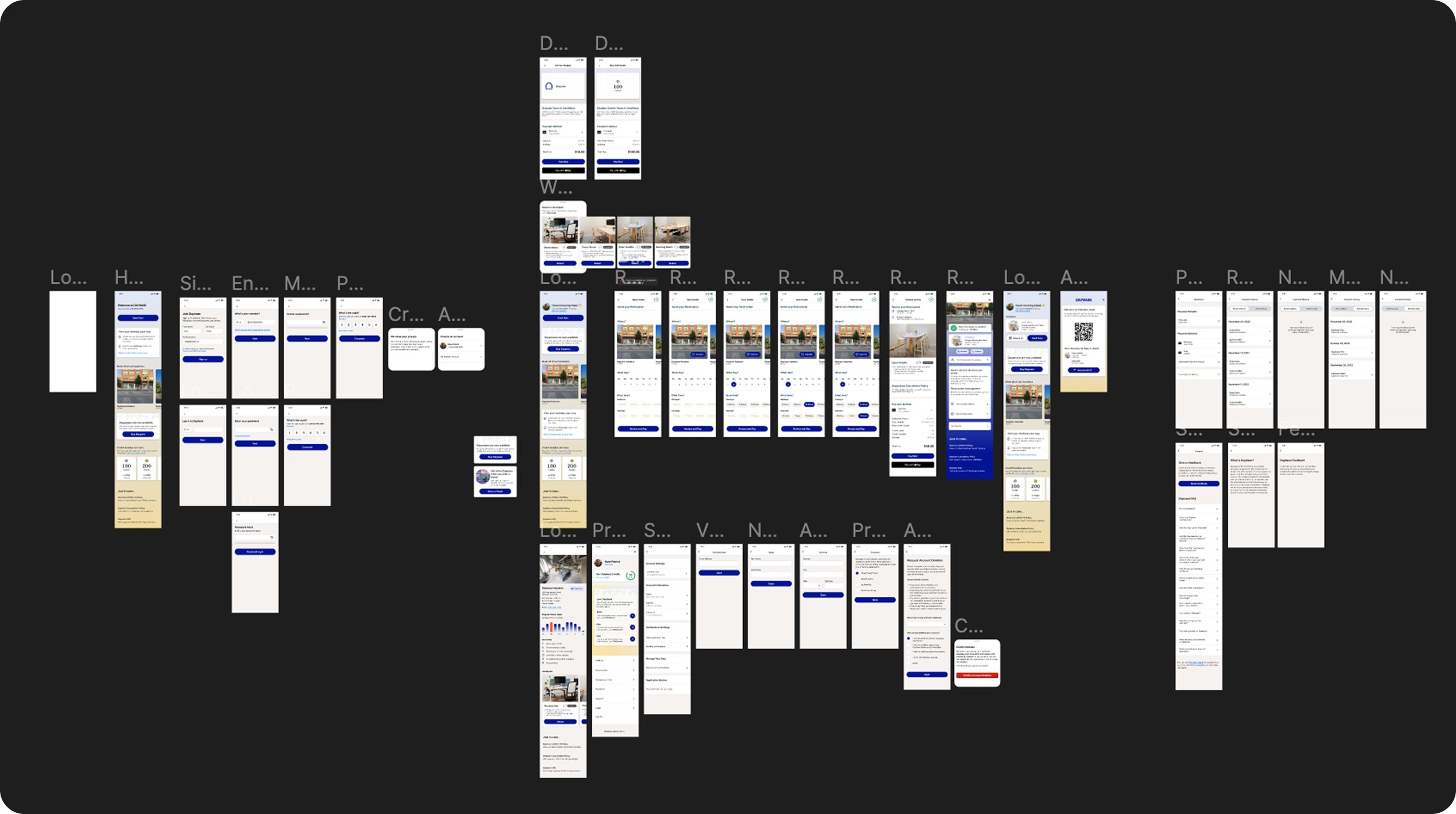
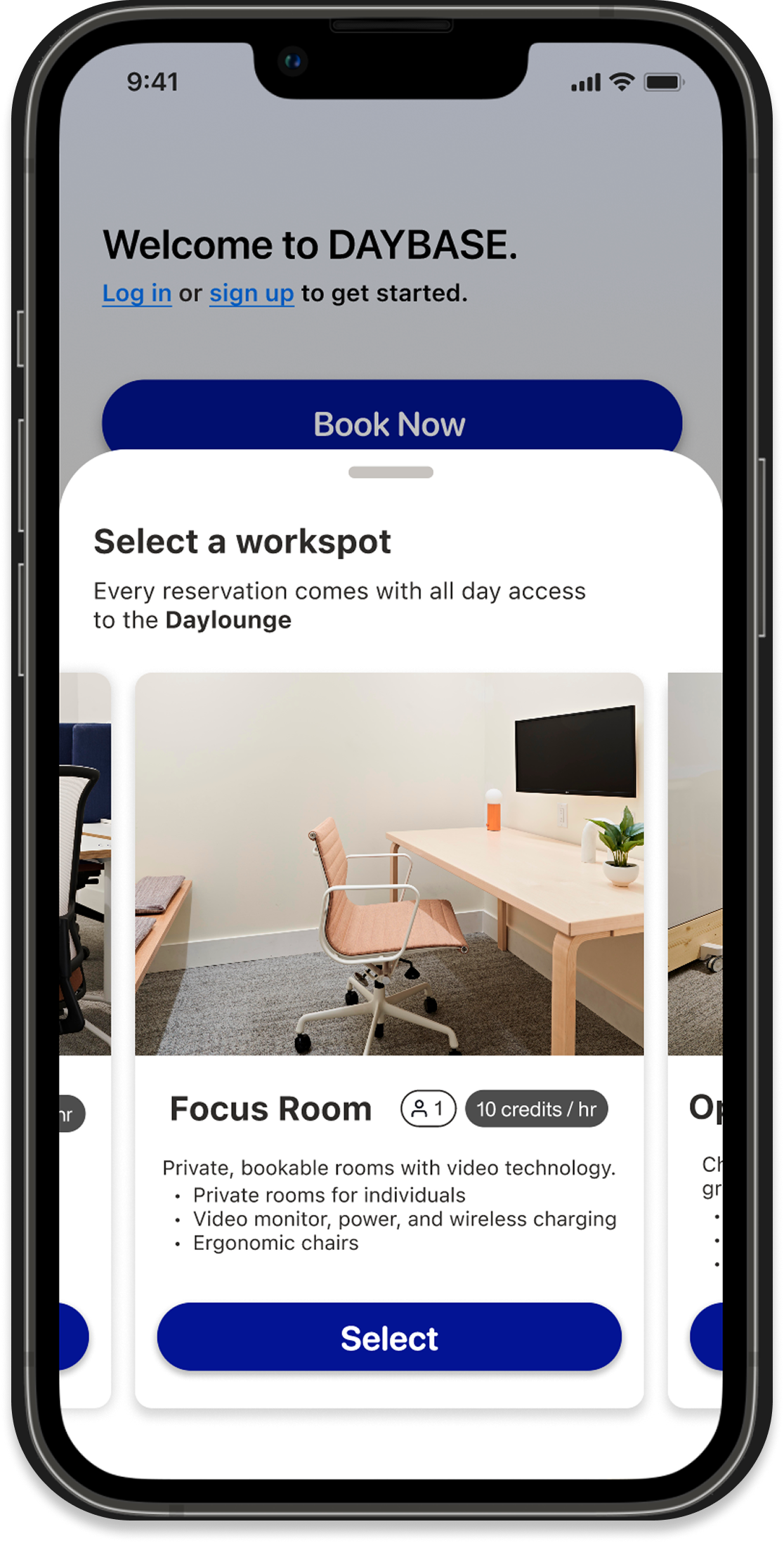
Upon additional testing, users immediately understood the workspace selection, but reserving workspaces on an hourly basis (on the hour, not for a 60 minute duration agnostic of start time) was a noted concern of ours.
95% of users tested (n=23) were able to successfully complete a booking.
8% of users tested wanted to delete their accounts after testing citing data hygiene. They were enthusiastic that we took a candid approach on protecting their data and privacy.
Of the users that wanted to change their reservation after booking, 80% were able to successfully alter the time of the reservation, change the workspace booking type, or cancel the reservation outright.
Outcomes & Learnings
50% of customers wanted to name their reservation and add it directly to their calendars on their mobile devices.
38% of customers wanted to be able to book from the desktop PC or directly from a Google map location search.
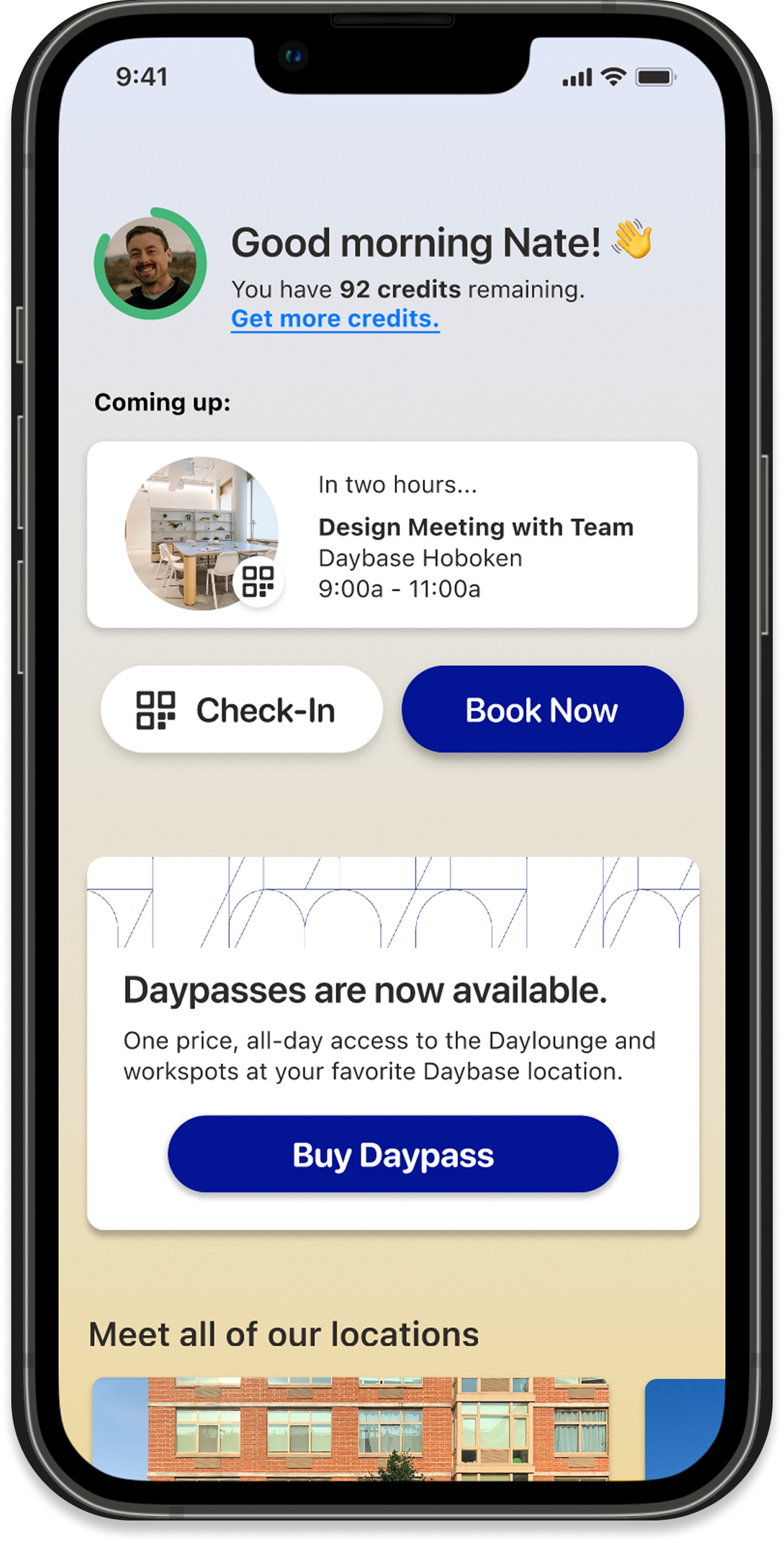
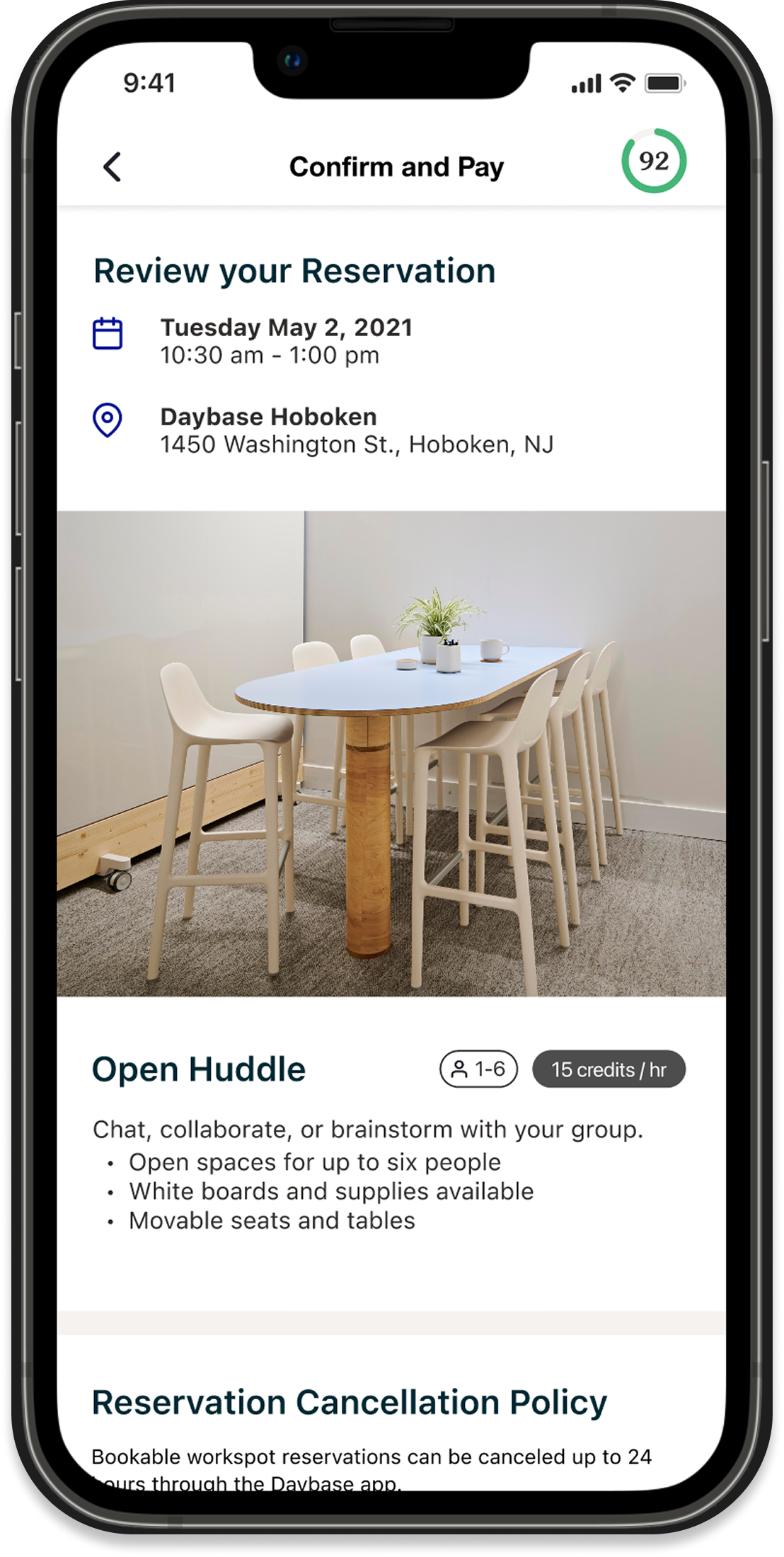
Some customers wanted to be able to circumvent purchasing credits and have their credit card charged directly. Daybase employed a credits-to-book business model which is shown in the green circle in the app.
From these findings we completely revamped the design for the booking workflow to be centered around the duration of the booking and not the static top-of-the-hour style we launched with.
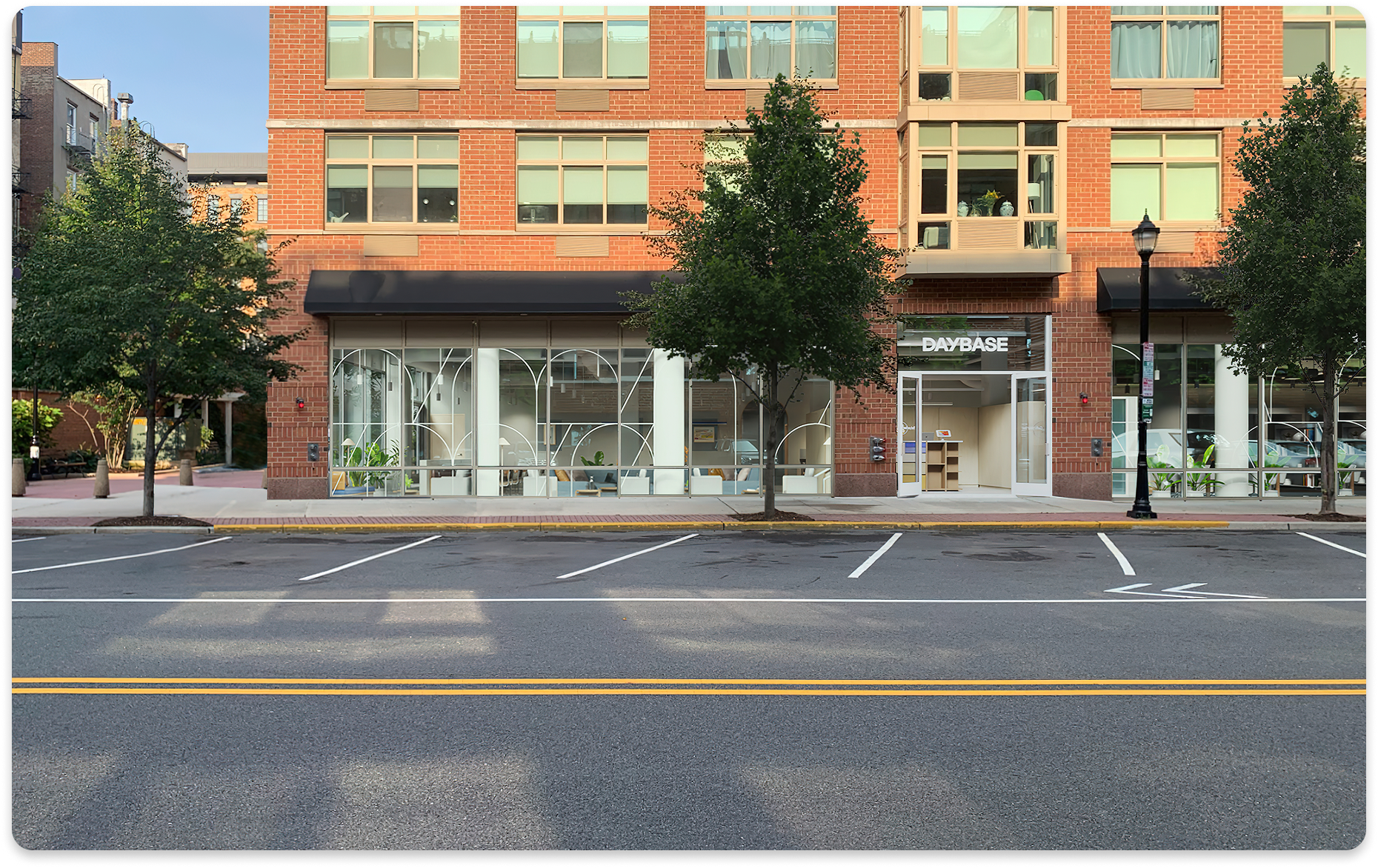
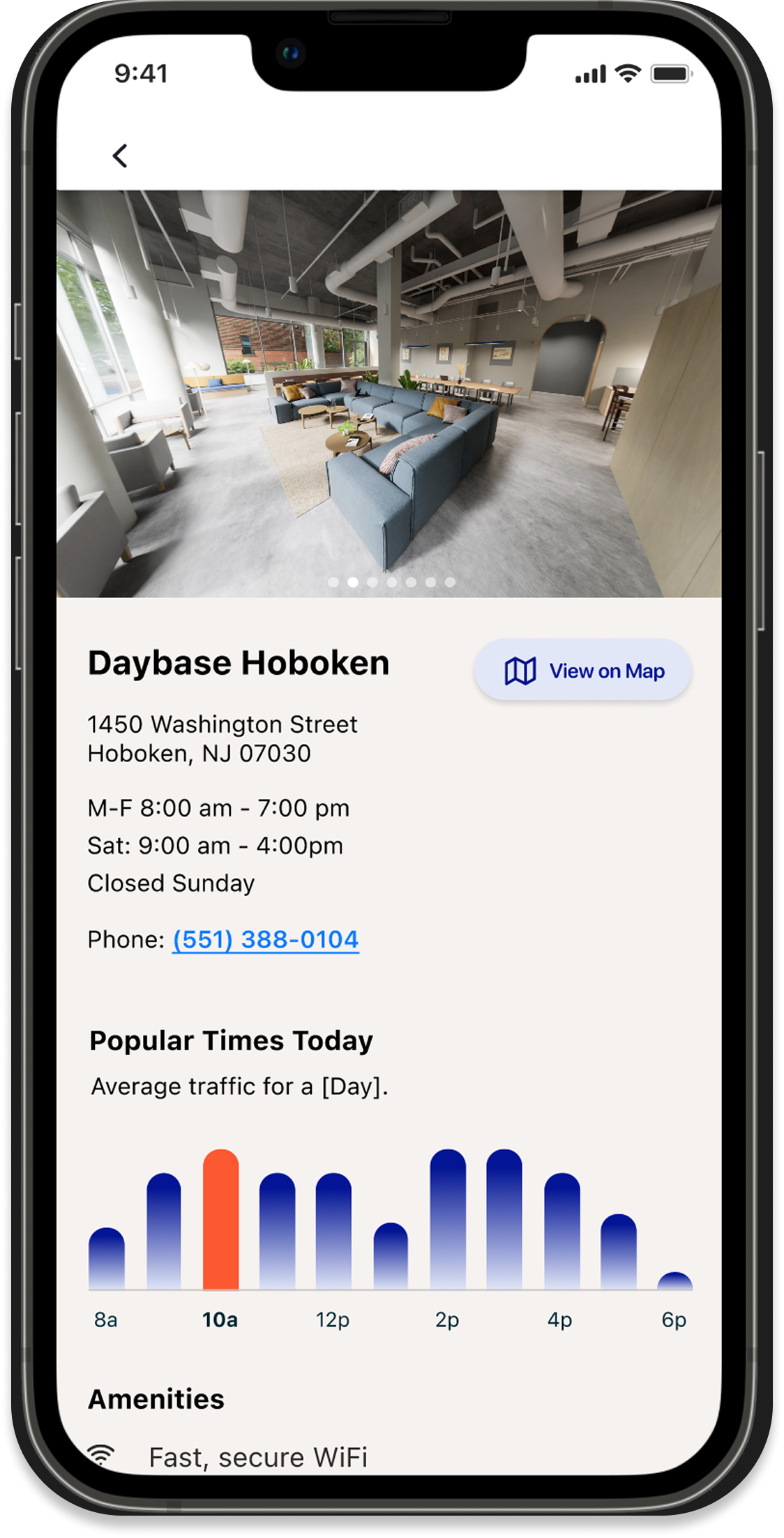
After the New York Times published an article on Daybase as a concept, interest skyrocketed which increased our ability to conduct research and get the app onto more devices. The first location opened in Hoboken, NJ with a second in Harrison, NJ shortly after. The company pivoted to securing locations which could act as a conduit between commuters in the suburbs of the New York tristate area and the main inner city working districts, saving time and expenses on commuting while still fulfilling the work from (or near) home philosophy.
I continued to conduct research with the Head of Product and travelled to the Hoboken, NJ location to conduct in-person user feedback.
Daybase lost solvency, as many startups do, in October 2022. The business shut down operations and the app was removed from both the Apple and Android app stores.